-
What exactly is the difference between a compact busway and a closed‑type busway?
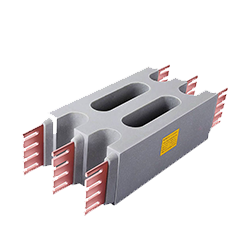
A compact busway is a type of enclosed busway. At present, busways are classified into several generations: the first generation is referred to as a busway, and the second generation is also called a busway. All busways are enclosed and include various types, such as compact busways, air‑insulated busways, fire‑resistant busways, fireproof busways, and cast‑in‑place busways, among others.
Dense busbar trunking, also known as enclosed busbar trunking, is a type of closed‑type busbar system. However, it is not the only kind of closed‑type busbar; for example, gas‑insulated busbars are also classified as closed systems. There are several varieties of enclosed busbar trunking, primarily dense busbar trunking and air‑insulated enclosed busbar trunking. All of these fall under the category of closed‑type busbar systems because their current‑carrying conductors are enclosed within the enclosure and electrically insulated from the external environment. Of course, there are subtle differences among them; for specific details, it’s best to consult a busbar manufacturer.
As can be seen above, the product category of enclosed busbar trunking systems is quite broad, encompassing compact busbar trunking systems, which are merely one type within this category.
Next, let’s see how the busbar trunking systems technical department explains it.
A compact busbar trunking system is a type of busbar trunking; both are enclosed systems. The key difference lies in the manufacturing process, which ensures tighter construction. Moreover, compact busbar trunking is typically pre‑fabricated by manufacturers, so users generally only need to install it after receiving it.
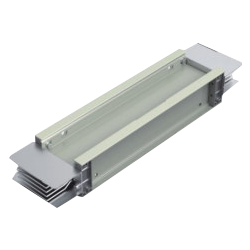
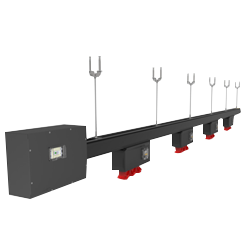
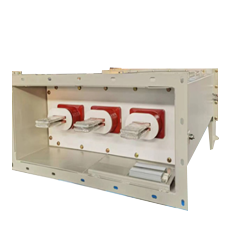
Closed busbar trunking (commonly referred to as busbar trunking) is a busbar system consisting of a metal enclosure—typically made of thick steel plate or aluminum alloy—conductive busbars, insulating materials, and associated accessories. This product can be configured either as a plug‑in closed busbar trunking with widely spaced outlets, or as an explosion‑proof switchgear‑type closed busbar trunking without intermediate junction boxes. In the power distribution systems of high‑rise buildings, cable runs and lighting circuits are often installed separately; the busbar trunking serves as the main electrical feeder, vertically mounted along the inner walls of electrical shafts, either in a single run or in multiple sections. A typical busbar trunking assembly includes the following components: end‑section busbar trunking, L‑shaped vertical (or horizontal) bend sections, T‑shaped vertical (or horizontal) bend sections, Z‑shaped vertical (or horizontal) bend sections, T‑shaped vertical (or horizontal) tap‑off sections, T‑shaped vertical (or horizontal) tee sections, X‑shaped vertical (or horizontal) tee sections, and other specialized configurations. Based on insulation methods, busbar trunking can be classified into three types: air‑insulated plug‑in busbar trunking, compact insulated plug‑in busbar trunking, and high‑strength insulated plug‑in busbar trunking.
Busbar trunking systems have poor waterproofing and heat‑dissipation performance. Regarding waterproofing, the busbars are prone to moisture absorption and leakage during installation, which can reduce the grounding resistance between phases. Heat dissipation in the busbar relies primarily on the enclosure; due to the close spacing between conductors, the heat generated by phases L2 and L3 is released relatively slowly, leading to a rise in the trunking’s temperature. The compact insulated plug‑in type is constrained by the enclosure panels, limiting production to horizontal sections no longer than 3 meters. Because the magnetic flux density between phases is low, under high currents the busbar can generate strong electromagnetic forces, causing cumulative resonance and resulting in noise. Plug‑in busbar trunking systems are pole‑type, featuring a small footprint, compact structure, reliable operation, high current‑carrying capacity, easy tap‑off for explosion‑proof switches, convenient maintenance, low energy consumption, and excellent thermal endurance—making them widely used in multi‑story buildings.
In general, compact busways are classified as enclosed busbars; however, they stand out for their small footprint, compact structure, reliable operation, high current-carrying capacity, explosion-proof switchgear compatibility, ease of maintenance, low energy consumption, and excellent thermal stability.
SUBSCRIPTION INFORMATION
Product Categories
Contact Us
Address: No. 735, Xinling Road, Shiqi, Panyu District, Guangzhou City, Guangdong Province


WeChat Official Account
Copyright © 2024 Betoba (Guangdong) Electric Power Technology Co., Ltd. All Rights Reserved. Power:www.300.cn SEO license