-
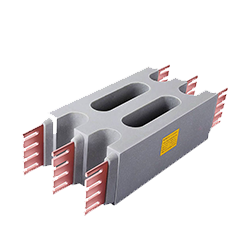
Cooling method of compact busbar trunking systems
If the temperature of a compact busbar trunking system becomes excessively high, common faults may occur. To ensure greater safety, it is essential to understand the cooling method employed by the compact busbar trunking system and take measures to prevent overheating from damaging the equipment.
Low-voltage transmission line conductors, electrical cables, electrical system software, densely packed branch‑type cable trays, sapling‑type conductive rods, and low‑voltage power cables, among others. Since different products exhibit varying heat‑dissipation characteristics, the current‑carrying capacity per unit cross‑sectional area also differs. For the same product and the same specification, under identical current conditions, heat dissipation performance will change as temperature rises; moreover, because cross‑sectional areas vary, temperature increases will not be uniform. Naturally, as temperature rises and resistance increases, operating voltage rises, leading to greater energy losses.
The current‑carrying capacity of compact busbars is the same. Therefore, calculating the current‑carrying capacity based on the ampacity per square millimeter of conductor cross‑section is incorrect for compact busbars. Factors such as product structural design and heat dissipation, as well as differences in characteristic impedance and inductance, are closely related to the current‑carrying capacity at a given operating condition. Accordingly, the national industry standard GB 7251.206 specifies that the rated voltage‑related temperature rise must be determined to establish the current‑carrying capacity and enhance the performance of busbar trunking systems.
Therefore, the installation of compact busbar trunking systems must be preceded by precise on-site measurements. The dimensional accuracy requirements for the length of the trunking are quite stringent, and the height and width of the plug‑in distribution boxes for compact busbar trunking should also be determined in accordance with the design specifications. When installing fire‑safety power distribution circuits, they shall be routed within non‑combustible structures, with a concrete protective layer of at least 30 mm. During installation, metal conduits or metal raceways must be protected with additional fire‑resistant materials, as metal conduits and raceways themselves do not possess inherent fire‑resistance properties. For cables with non‑propagating‑flame sheathing, metal conduits and metal raceways shall not be used for protection within vertical shafts. However, when routing cables through floor slabs in vertical shafts, they must pass through conduit or raceway sleeves; the gaps around these sleeves must also be sealed.
SUBSCRIPTION INFORMATION
Product Categories
Contact Us
Address: No. 735, Xinling Road, Shiqi, Panyu District, Guangzhou City, Guangdong Province


WeChat Official Account
Copyright © 2024 Betoba (Guangdong) Electric Power Technology Co., Ltd. All Rights Reserved. Power:www.300.cn SEO license