-
Advantages of Using Busway Systems
With the development of the socio‑economic landscape and advances in science and technology across all sectors, social infrastructure and equipment are proliferating, and electricity consumption is steadily rising. In particular, the growing number of workshops and factories has outstripped the capacity of the power supply, creating significant challenges for engineering projects and industrial facility construction.
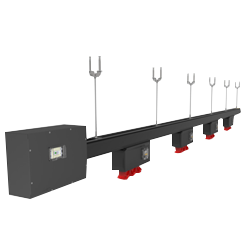
Thus, busbar trunking systems have emerged as a new type of point-to-line solution, capable of transmitting high currents. By leveraging cutting-edge technologies and advanced manufacturing processes, and by incorporating premium insulating materials, these systems deliver enhanced safety and reliability.
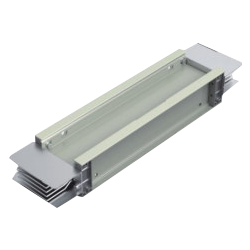
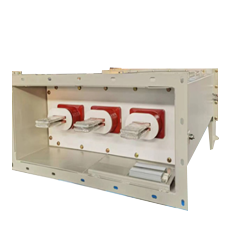
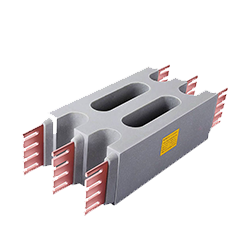
Busbar trunking systems are characterized by their safety and reliability, long service life, exceptionally high current-carrying capacity, non‑combustibility, low voltage drop, strong short‑circuit withstand capability, compact dimensions, light weight, simple operation, ease of installation, and an aesthetically pleasing appearance. Moreover, these systems use copper bars and aluminum as conductors, making them highly advantageous for large‑scale construction and power distribution compared with conventional distribution methods.
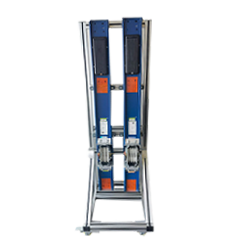
Busbar trunking systems are categorized into copper‑composite types, tightly insulated types, and aluminum‑copper composite types with a sandwich‑structured core. They feature stable and reliable performance, high distribution efficiency, easy installation, excellent heat dissipation, low voltage drop, strong shock resistance, and a meticulously engineered design. These systems can operate in harsh environments, offer a high degree of protection, and support large current ratings. Compact‑design busbar trunking systems provide superior heat dissipation.
SUBSCRIPTION INFORMATION
Product Categories
Contact Us
Address: No. 735, Xinling Road, Shiqi, Panyu District, Guangzhou City, Guangdong Province


WeChat Official Account
Copyright © 2024 Betoba (Guangdong) Electric Power Technology Co., Ltd. All Rights Reserved. Power:www.300.cn SEO license