-
Closed-type busbar trunking systems offer the following advantages:
Different insulation materials: In gas‑insulated busbars, there is a deliberate gap between the grounding copper bars, meaning that the insulation at the core of the grounding bar is based on gas. By contrast, in enclosed busbars—also referred to as closed‑type busbars in many regions—the insulating material between the conductors is typically a chemically synthesized insulator. Oil‑immersed transformers and enclosed busbars are collectively referred to as busbars. Both enclosed busbars and standard busbars denote the same device.
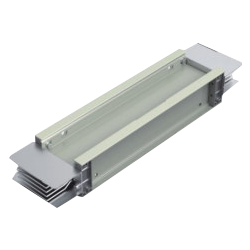
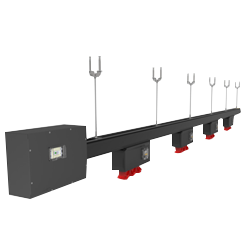
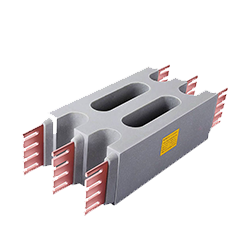
A closed busbar trunking system is a busbar system constructed from metal sheet materials—carbon steel or aluminum—designed to enclose and protect the enclosure, conductive busbars, insulating materials, and associated components. It can be configured as a wiring‑type closed busbar with junction boxes installed at regular intervals, or as an explosion‑proof switchgear‑type closed busbar without intermediate junction boxes. In the intelligent management systems of power supply and distribution in high‑rise buildings, the main trunk lines play a critically important role—akin to the pulmonary artery in the human body—such that any obstruction can lead to severe consequences. Consequently, manufacturers, installers, and research institutions have been striving to enhance the reliability of these main trunk lines, resulting in new materials that are easy to install, cost‑effective, and exhibit stable performance.
What is a busbar trunking system? A busbar trunking system is a sealed, metal‑enclosed industrial device composed of copper or aluminum busbars, used to distribute electrical power and serve high‑capacity loads. It is an efficient substation component, well suited for high‑rise buildings as well as small, medium, and large manufacturing facilities, supporting economic development and ensuring cost‑effective power distribution. As energy consumption across various industries continues to rise, traditional cables can no longer meet the demands of high‑current transmission and distribution systems. The parallel routing and installation of multiple cables often make on‑site assembly and connection more challenging. In contrast, busbar trunking systems—作为一种新型变电设备线—incorporate advanced technologies, materials, and manufacturing processes, significantly reducing contact resistance and heat generation at the interfaces between the busbars and their mounting supports. The use of high‑quality insulating materials further enhances safety and reliability.
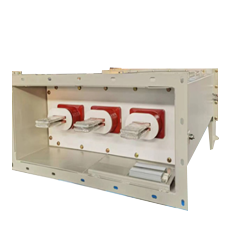
Busways and busbar trunking systems are, in fact, essentially the same thing—one is enclosed, while the other is not. Enclosed busbars are commonly referred to as busbar trunking systems; in essence, busbar trunking is the enclosed version of a busbar. Both enclosed busbar trunking and busbar trunking refer to the same product. An enclosed busbar trunking system consists of a protective enclosure made from metal sheet—typically carbon steel or aluminum—along with conductive busbars, insulating materials, and associated accessories. It can be configured either as an insert‑type enclosed busbar with plug‑in connection boxes at intervals, or as an explosion‑proof enclosed busbar without intermediate connection boxes. It is a type of busbar trunking designed for use in plastic‑encased, fully enclosed main busbar systems.
SUBSCRIPTION INFORMATION
Product Categories
Contact Us
Address: No. 735, Xinling Road, Shiqi, Panyu District, Guangzhou City, Guangdong Province


WeChat Official Account
Copyright © 2024 Betoba (Guangdong) Electric Power Technology Co., Ltd. All Rights Reserved. Power:www.300.cn SEO license